About your coach
Hi, I’m
Victor.
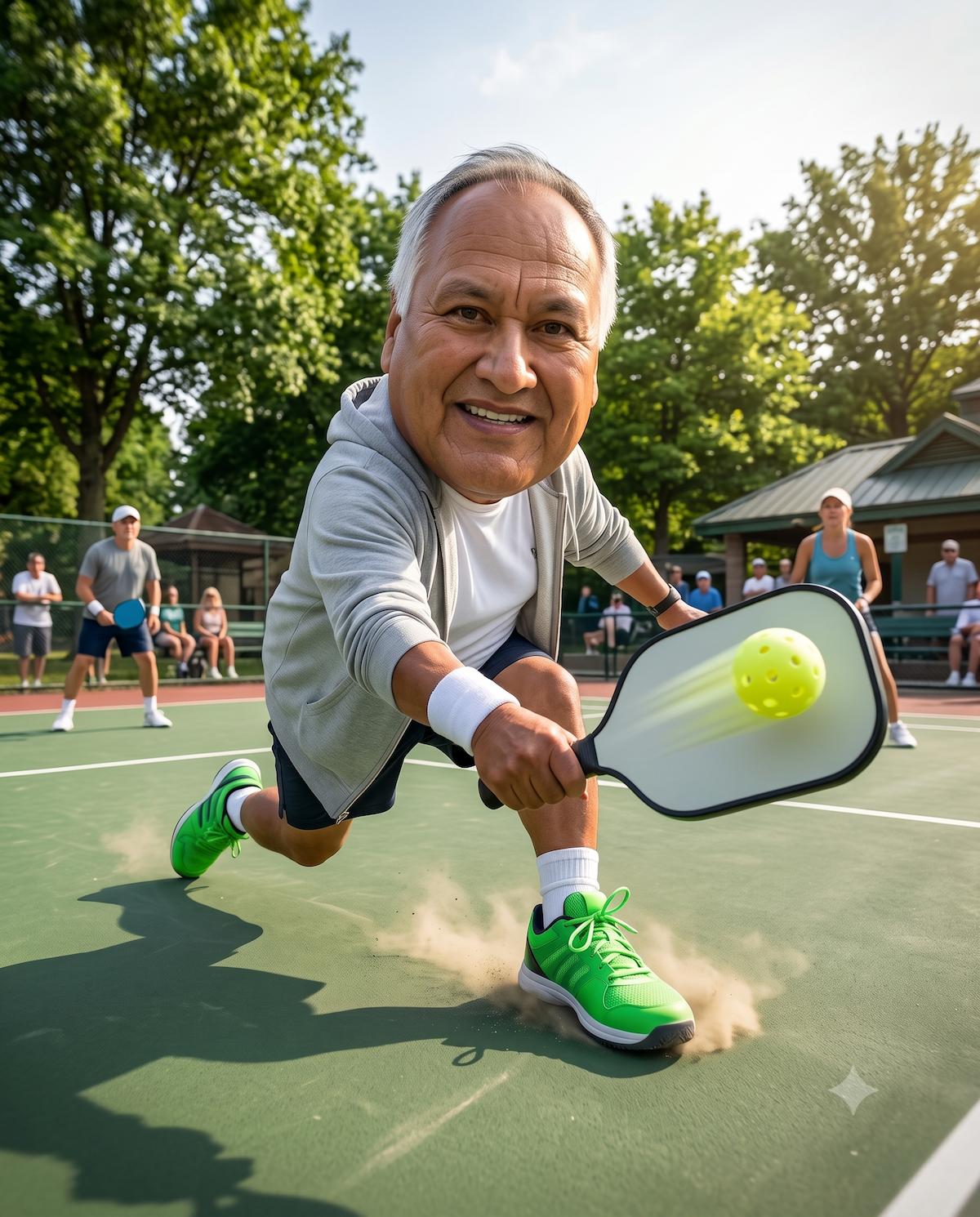
I’ve been playing pickleball for ten years, mostly around Apex, Cary and Raleigh, and coaching for about four of them. My DUPR says 3.8. I self-rate 4.0. The honest answer is somewhere in between — and closing that kind of gap is exactly what this whole site is about. Let me be direct with you: I’m not the fastest player on the court, and I never will be. I win points by thinking, not by running.
Drop the file in and it appears here
The short version
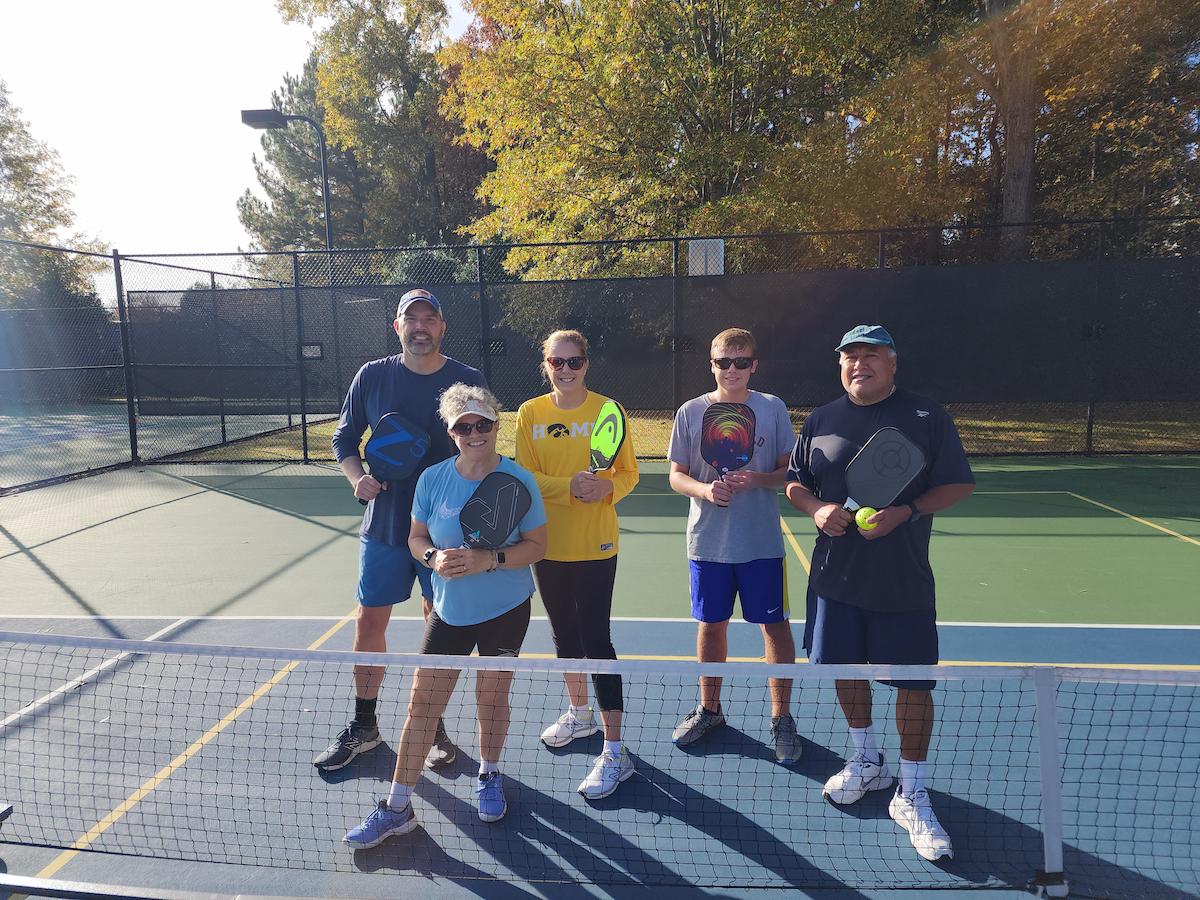
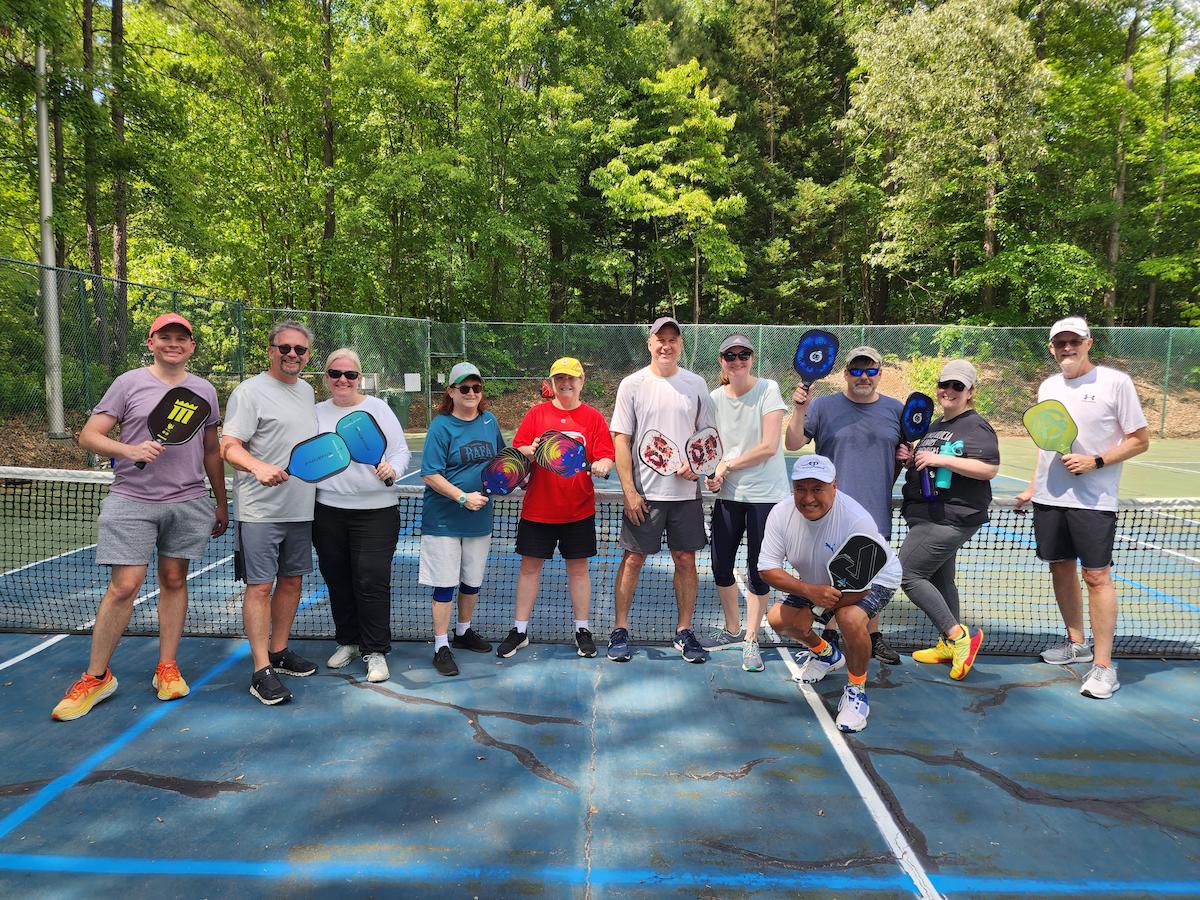
Ten years ago somebody handed me a paddle, and that was that. Since then I’ve played more tournaments than I’ve kept track of — somewhere past thirty — mostly around my home courts in Apex, Cary and Raleigh, and a good number in other cities and other states. About ten medals have come home with me. Some gold, some silver, some bronze. I’m proud of all of them, including the bronze ones, because every one of them taught me something the gold ones didn’t.
Doubles and mixed doubles are my game. I rarely play singles, and I’ll tell you why without dressing it up: mobility. I don’t love running, and at some point you stop fighting your own body and start using your head instead. That turned out to be the best thing that ever happened to my pickleball. I’m not a banger — never have been. I play a different game against every opponent I meet, because every opponent hands you a different set of problems if you’re paying attention.
And I’m still learning. Ten years in, thirty tournaments deep, four years of coaching, and I still walk off the court most weeks with something new to work on. That isn’t humility talking. That’s just what this sport does to you.
That’s the one thing I say to every player I work with. Not because I want you playing it safe — but because the middle of a game is the worst possible place to find out whether a shot works. Practice it, then trust it. Skip the practice, and you’re just gambling with your partner’s point.
Off the court
Professional
I’m a Computer Systems Engineer by training, and these days most of my work lives in artificial intelligence and vibe coding. I work for Toshiba, an international company — which means I travel a fair amount. That part I enjoy. Traveling means new courts, new players, and new ways to get beaten by somebody whose game I’ve never seen before. Which is its own kind of coaching.
Personal
I live in Apex, North Carolina, right next door to Cary and Raleigh. I have four children — two girls and two boys. My faith matters more to me than anything else on this page: I’m an evangelical Christian, and I’ve had the privilege of preaching the Gospel in a number of countries. What I care about is making it real in ordinary life, not just on Sunday. That includes how I treat the person on the other side of the net.
How I got here
- TEN YEARS AGOPicked up a paddle
No plan, no expectations. It took about a week to become a problem. - THE EARLY YEARSStarted entering tournaments
Learned quickly that recreational good and tournament good are two very different things. - ALONG THE WAYAround ten medals, in three colors
Local events and a handful in other cities and states. Doubles and mixed doubles. - FOUR YEARS AGOStarted coaching
Paid work, and plenty of free work for friends. I build materials for my students — this site grew straight out of that. - TODAYStill learning, still playing
Apex, Cary, Raleigh, and wherever the next tournament happens to be.
Medals, brackets & hardware
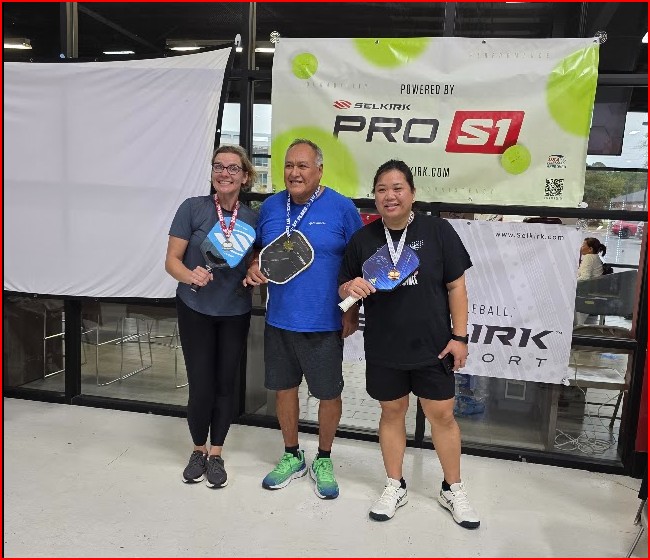
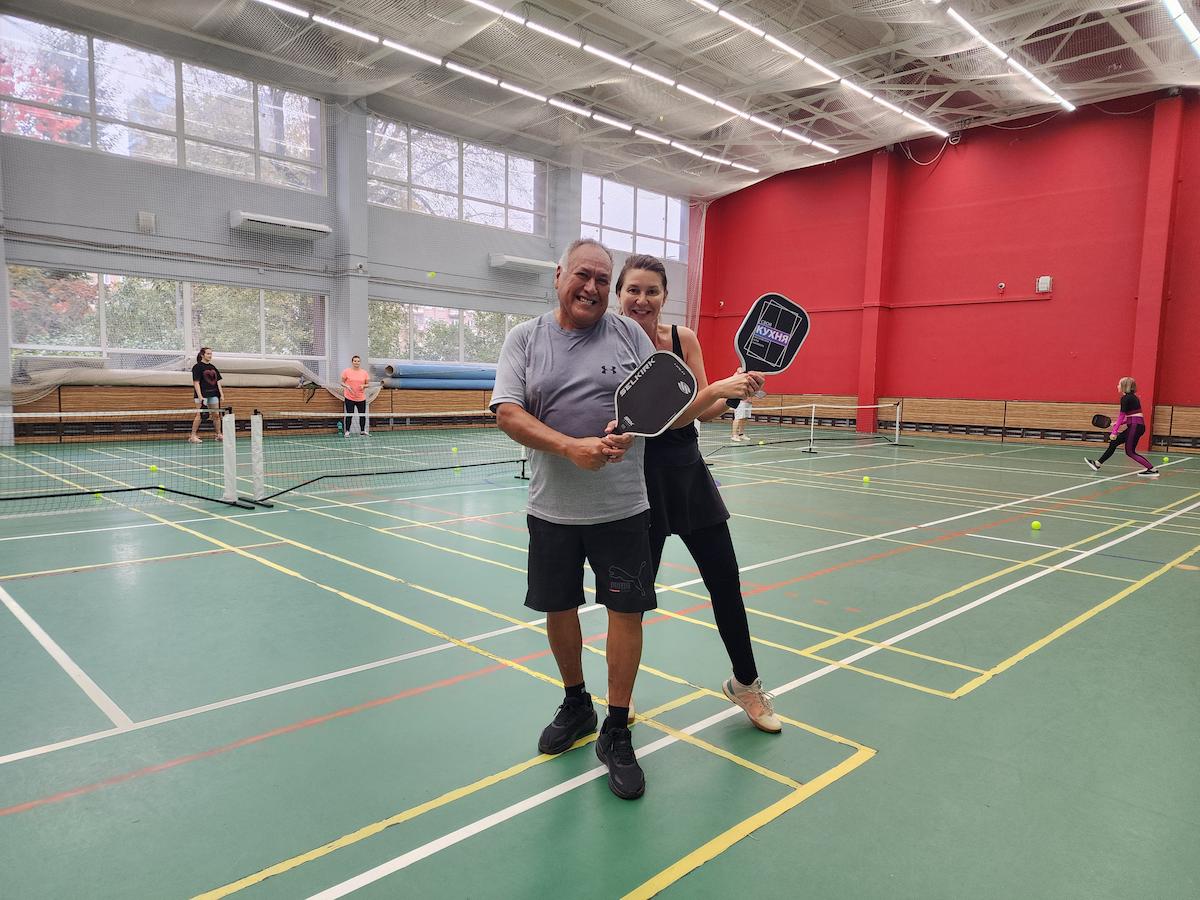

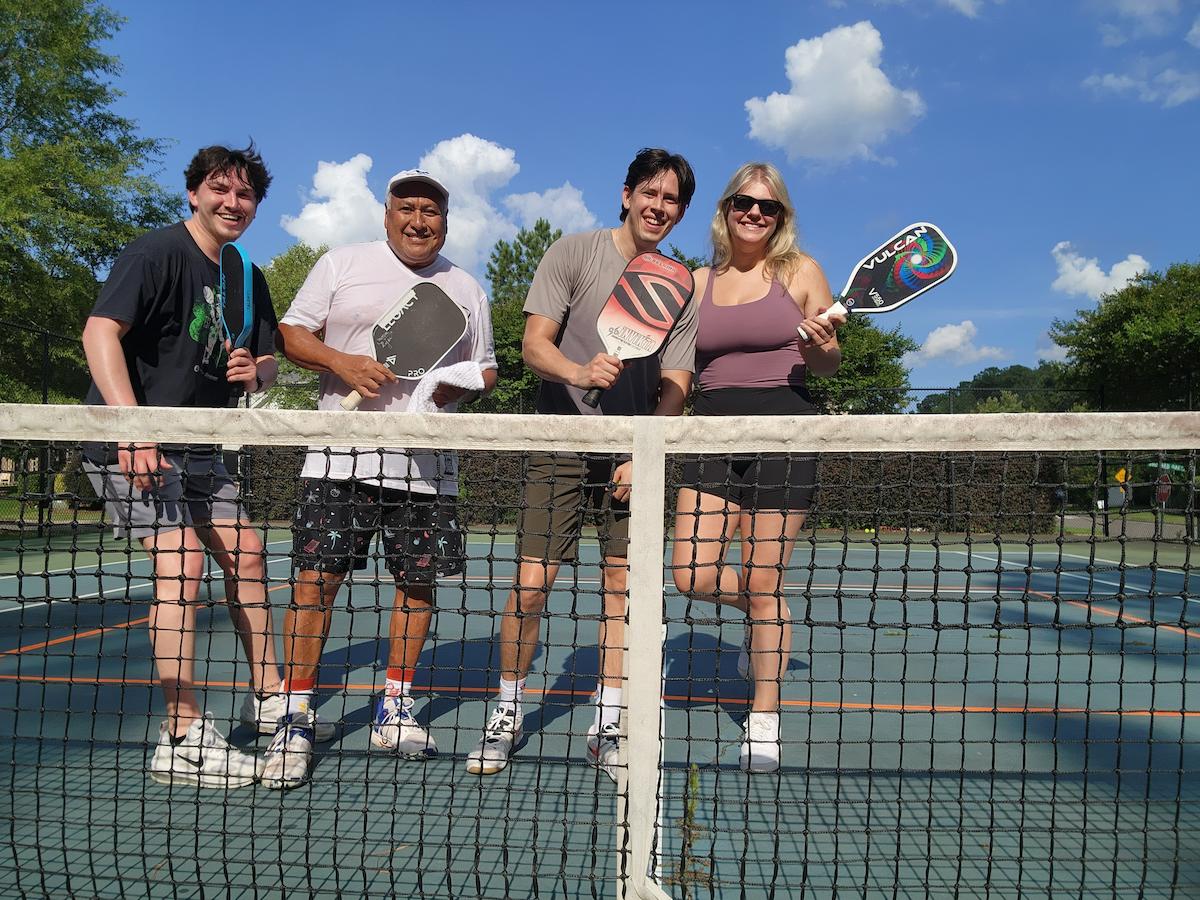
Ten of these came home with me over the years. The gold ones are nice. The bronze ones taught me more.
What you’ll find here
This is the manual I wish somebody had handed me ten years ago. Fourteen chapters — grip and paddle face, how spin actually works on a plastic ball, court geometry with the real numbers attached, footwork, partner systems, and the shot decisions that separate a 3.0 from a 4.5. Plus a shot library, a 30-day practice plan, and a plain-English rules reference.
Nothing here is locked. Start at Overview if you want the argument, or go straight to whatever is costing you points right now. And if something doesn’t make sense, call me. That’s what the Contact page is for.
Chapter 01 — The thesis
The point is
decided in a
7-foot strip.
Every serve, drive, lob and reset in this game exists to answer one question: who controls the seven feet in front of the net? This is a technical manual for winning that strip — grip and paddle-face angles, real spin mechanics, court geometry with the numbers attached, footwork patterns, and the shot-selection trees that separate a 3.0 from a 4.5.
The same court appears in every chapter. Trajectories, footwork paths and coverage zones are drawn on it to scale, so the geometry you read here is the geometry you stand in.
What actually loses rec-level points
Below roughly 4.0, the overwhelming majority of rallies end because someone made an error — not because someone hit a winner. Balls into the net, balls long, and the pop-up that gets buried. That is good news: errors are a decision problem before they are a technique problem.
Three habits produce most of them:
- Hitting through the ball when you should be absorbing it. A tight grip in the transition zone turns a reset into a pop-up.
- Standing in the wrong place — specifically, parked seven to twelve feet behind the kitchen line, the one spot on the court where every ball arrives at your shoelaces.
- Attacking a ball that was below the net at contact. Physically, that shot has to travel up before it travels down. You are hitting into a wall you built.
Coach’s secret
The single most valuable sentence in this book: you cannot hit down on a ball you contact below the top of the net. Everything in the kitchen game — patience, dink height, target selection, when to speed up — is downstream of that one physical fact. Learn to check contact height before you choose a shot and your unforced error count falls in a single session.
How this manual is built
01 – 04
Foundation
Court dimensions and the rules that shape tactics, grip bevels and pressure, contact point, and the real physics of spin on a perforated ball.
05 – 08
The point
Serve and return, the third and fifth shot, transition-zone resets, the dink battle, and hands battles at the line.
09 – 14
Space, plans, reps
Movement and stacking, angle geometry, opponent-specific game plans, match management, a searchable shot library, drills, and a 30-day plan.
Every chapter you open is marked in the rail. Nothing here is gated — jump straight to Spin Engine or Angles if that is what you came for.
Read the rating ladder first
Tactics that win at 3.0 lose at 4.5. Pick your current level and the chapters will make more sense.
2.5 Getting the ball in play
3.0 Rallying, but reactive
3.5 Has shots, lacks selection
4.0 Constructs points
4.5 – 5.0 Dictates
Chapter 02
The Court Lab
You cannot compute angles on a court you have not measured. Every number below is a tactical input, not trivia — the 2″ net sag at center decides your dink targets, and the 15′ between baseline and kitchen line is the entire reason the third shot exists.
Ten pixels equal one foot. Turn on Two-bounce rule to see why the serving team starts every point 15 feet behind where they want to be — that gap is the whole reason Chapter 06 exists.
The numbers that change decisions
| Measurement | Value | Why it matters tactically |
|---|---|---|
| Court | 20′ × 44′ | Same footprint for singles and doubles. Two players cover 20 feet of width — roughly ten feet each, which is why the middle is a seam and not a wall. |
| Non-volley zone | 7′ from net | The only 7 feet on the court where the ball must bounce before you may hit it. Control of this line is control of the match. |
| Net at sidelines | 36″ | Highest barrier. Down-the-line dinks and drops carry the most net risk. |
| Net at center | 34″ | Two inches lower. A cross-court dink passes over the sagged middle, so it is both longer and lower-risk. This is the highest-percentage ball in pickleball. |
| Baseline to NVZ line | 15′ | The transition zone. You must cross it under fire, which is what the third-shot drop buys you time to do. |
| Service court | 10′ × 15′ | Deep serves compress your opponent’s return options and delay their arrival at the kitchen. |
| Cross-court diagonal | ~48′ | Roughly four feet longer than down the line. More margin for error on every angled ball. |
| Recommended playing surface | 30′ × 60′ | The out-of-bounds run-off. Determines whether an Erne or an around-the-post is physically available to you. |
The rules that are actually tactics
Most rule questions are trivia. These six are strategy, and they are current to the 2026 rulebook.
1 — The non-volley zone is about your feet, not the ball
You may enter the kitchen at any time to play a ball that has bounced. What you may not do is volley while any part of you — body, paddle, shoe, dropped sunglasses — touches the zone or its lines. Momentum counts: if you volley from outside and your momentum then carries you in, it is a fault even after the ball is dead. Before your next volley you must re-establish with both feet outside.
2 — Two-bounce rule
The serve must bounce, and the return must bounce. Only then may anyone volley. This single rule hands the receiving team the net for free at the start of every point, and it is why the serving team wins fewer points than beginners expect.
3 — The serve, tightened for 2026
Two legal serves. The volley serve (struck out of the air) must clearly meet three tests at contact: the arm moving in an upward arc, contact below the waist, and the highest point of the paddle head below the highest part of the wrist. The 2026 rulebook added the word “clearly” to all three — a borderline serve is now called a fault rather than given the benefit of the doubt. The drop serve has none of those restrictions: release the ball with no added force and no spin from the fingers, let it bounce, hit it from any height. If your volley serve is marginal, the drop serve is free insurance.
4 — Spin is legal from the paddle, illegal from the hand
You may generate as much spin as you like with the paddle at contact. You may not manipulate the ball with your fingers during the release. The pre-spun “chainsaw” serve was banned in 2023, and the 2026 rulebook states the finger-spin prohibition explicitly. Everything in Chapter 04 is legal; hand-spinning the release is not.
5 — No service let
A serve that clips the net and lands in the correct service court is live. Play it. Every season people freeze on that ball and hand over a point.
6 — The lines, and where the ball must land
The serve must clear the non-volley zone entirely; landing on the NVZ line is a fault. Every other line is in. Out calls now have timing requirements too — if you return the ball, your “out” call has to come before the opponent hits it or before the ball is dead, or play simply continues.
Coach’s note
Rally scoring formats are recognized in the 2026 rulebook, and under them either team can score the game-winning point. Traditional side-out scoring to 11, win by 2, still governs most tournament play. Know which one you are playing before the first serve — it changes how aggressively you should play at 9-all.
Chapter 03
Grip, Face Angle
& Contact Point
Three variables decide where a pickleball goes: the angle of the paddle face at contact, the direction the paddle is traveling, and how much it slows down when the ball arrives. Grip controls all three. Nothing else in this manual works if this chapter is loose.
Continental — index knuckle on bevel 2
The neutral grip, and the one you should live in. The face sits square whether you hit a forehand or a backhand, so you never have to change grips during a hands battle at the line. Slight natural open face on the dink, easy to slice, adequate for a roll.
Bevel numbering starts at the top of the handle and rotates toward your dominant side. Left-handed players mirror every number.
Grip pressure — the dial nobody teaches
Rate your squeeze from 1 (paddle almost falling out) to 10 (white knuckles). Pressure changes how much energy the paddle returns to the ball. A loose grip lets the paddle decelerate on impact and the ball dies; a firm grip rebounds it. This single dial is the difference between a reset and a pop-up.
| Shot | Pressure | Why |
|---|---|---|
| Reset from the transition zone | 2 – 3 | Maximum absorption. You want the ball to fall dead in the kitchen, not rebound. |
| Dink | 3 – 4 | Soft enough to feel the ball, firm enough to control face angle. |
| Third-shot drop | 3 – 4 | Lift with the legs and shoulder, not the hand. |
| Block / counter at the line | 5 – 6 | Firm wrist, no swing. The opponent’s pace does the work. |
| Drive / roll volley | 6 – 7 | Enough to hold the face through a fast brush. |
| Overhead | 6 – 7 | Stability through a high-speed contact. Above 7 you lose accuracy. |
Coach’s secret
Do not hold your chosen pressure — arrive at it. Sit at 2 or 3 between shots and squeeze into the number only in the last few inches before contact. Constant tension kills reaction speed and produces the panicked pop-up more reliably than any technical flaw.
Paddle face angle, by shot
“Open” means the hitting surface tilts up toward the sky; “closed” means it tilts down toward the court. Angles below are approximate and measured from vertical.
Open face — lift and float
- Dink: 15° to 25° open, contact below net height, lift from the shoulder.
- Reset / block: 20° to 30° open, paddle almost stationary, absorb.
- Third-shot drop: 20° open with a low-to-high path from the knees.
- Slice: 30°+ open with a high-to-low path.
Closed face — drive and dip
- Topspin drive: 5° to 15° closed, swing path 30° to 45° upward.
- Roll dink: nearly square to 5° closed, short fast brush up the back.
- Speed-up from the line: square face, contact out front, wrist snap not arm swing.
- Put-away: square to slightly closed — only ever on a ball above net height.
The paddle is fixed; only its tilt changes. Two degrees is the difference between a dink that clears and a dink in the tape — which is why the fix for a netted dink is never “swing harder.”
Common mistake
Trying to fix a netted dink by swinging harder. A dink into the net is almost always a face angle problem, not a power problem. Open the face two degrees and hit it exactly as softly as before.
Contact point and the ready position
- Contact in front, always. Roughly in line with or ahead of your lead knee. Behind the body you lose face control, and the ball goes wherever the paddle happened to be pointing.
- Paddle tip up, head at chest-to-chin height, out in front. Not resting on your thigh. At the kitchen line the ball can arrive in under half a second; a paddle at your waist will never get there.
- Default to a backhand-ready face. Around 70% of balls at the line arrive on your backhand side or at your body. Set the paddle at roughly 12 to 1 o’clock — slightly toward the backhand — and the forehand is still an easy rotation away.
- Wide base, knees bent, weight on the balls of your feet. Height comes out of your knees, never out of your back. Bending at the waist puts your paddle behind your body and your eyes off the ball line.
- Track the ball to the paddle. Then, in the moment before your opponent contacts the next ball, look at their paddle face. It tells you direction earlier than the ball does.
Drill to practice
Pressure ladder, 10 minutes. With a partner dinking cross-court, call a number out loud before every third ball — “two” for a dead dink, “six” for a counter. Hit that pressure. The goal is not the shot; it is teaching your hand that pressure is a variable you control rather than a mood you are in.
Chapter 04
The Spin Engine
A pickleball is a hollow perforated sphere with almost no mass and a great deal of drag. It will never spin like a tennis ball — and that is exactly why spin is undervalued at rec level. You do not need much. You need it at the right moment, on the right ball, and you need to know what the bounce will do afterward.
Solid line is flight, dashed line is the path after the bounce. The bounce is where spin pays you — a rec opponent who reads your flight correctly still gets the kick wrong.
What spin actually does to this ball
A spinning ball drags air around itself. That asymmetry produces a force perpendicular to the flight path — the Magnus effect. On a light, high-drag plastic ball the in-flight curve is modest compared with tennis, but two consequences are large and immediately usable:
- Topspin lets you swing faster without going long. The downward force pulls the ball into the court, so you can add pace and still clear the net by a safe margin. That is the entire mechanism behind the roll dink and the topspin drive.
- Spin changes the bounce more than the flight. Topspin kicks forward and up into the opponent’s body. Backspin skids low and sits, checking forward speed. Sidespin kicks sideways off the court and away from where the opponent set their feet. Rec players read flight; almost none of them read bounce.
The limiting factor is friction between the paddle face and the ball. Raw carbon and textured surfaces grab more than smooth composites — within the manufacturing limits the rulebook allows. Sanctioned play now requires an approved paddle, and surface alterations or added decals intended to increase spin are prohibited.
Mechanics, by spin type
Topspin — the roll
- Start the paddle head below the ball, roughly at knee height for a dink, hip height for a drive.
- Swing path 30° to 45° upward, face 5° to 15° closed.
- Brush up the back of the ball — you should hear a short scuff, not a thud.
- Finish high and across, not out toward the target. The follow-through direction is what proves you brushed rather than pushed.
- Grip pressure 4 on a roll dink, 6 on a drive. Squeeze at contact only.
Best use: a dink that lands in the kitchen but jumps into the opponent’s hip, forcing a defensive pop-up you can attack.
Backspin — the slice
- Paddle starts above the ball, face 25° to 35° open.
- High-to-low path, cutting under and slightly across the back of the ball.
- Short stroke. A long slice floats, and a floater at the kitchen line is a gift.
- Grip pressure 3. Let the face do the work.
Best use: third-shot drops that check up rather than skid forward, and low-skidding returns that force your opponent to hit up on the third shot.
Sidespin — the pull
- Paddle path travels across the ball, roughly parallel to the net, face near square.
- Outside-in for a ball that curves away from the opponent; inside-out to bring it back into them.
- Contact well out in front so you can steer the path.
Best use: the cross-court dink that keeps curving toward the sideline, dragging your opponent off the court and opening the around-the-post. Also the single most annoying serve in recreational pickleball.
Flat — the honest ball
- Square face, level path, contact out front, minimal follow-through.
- Fastest ball to the target because none of your energy went into rotation.
- Least margin over the net. Only justified when contact is above net height.
Best use: the put-away and the counter-block. Do not romanticize spin — when the ball is high, hit it flat, hit it down, end the point.
Coach’s secret
Spin’s highest-value use in doubles is not the winner — it is manufacturing an unattackable ball. A topspin roll dink that lands short and jumps at the shoelaces gives your opponent no upward ball to attack. You will win more points from the pop-up it produces two shots later than you will ever win directly.
Common mistake
Trying to roll a ball you contacted below the top of the net from a low, off-balance position. Topspin requires an upward swing path with speed; from a bad position it becomes a fast ball traveling upward into a waiting paddle. Rule: roll only when balanced and only when the ball is at or above your knee. Otherwise reset.
Drill to practice
Scuff test. Stand at the kitchen line, drop-feed to yourself and roll ten dinks cross-court. Listen. A clean brush makes a short dry scuff; a push makes a dull knock. Then hit ten slices and listen for the same distinction. You are training your ear to audit your own contact when no coach is watching.
Chapter 05
Serve & Return
Under side-out scoring only the serving team can score, and the two-bounce rule hands the net to the receivers. So the serve is not a weapon — it is a setup. The return, by contrast, is one of the two or three most important shots in the entire sport, and almost nobody practices it.
The serve: depth, then placement, then spin
Priority order, and it never changes:
- In. A missed serve is a point you handed over for nothing. Track your serve percentage for one session; if it is below 95% you have no business adding anything.
- Deep. Aim for the last three feet of the service box. A deep serve pushes the returner back, which delays their arrival at the kitchen line and shortens the window in which they are set.
- Placement. To the backhand, or into the outside corner to drag them off the court, or hard at the body of a returner with long arms.
- Spin and pace. Last, and only once the first three are automatic.
Deep to the backhand
The default. Most players’ backhand return is shorter and floatier, which gives your team a better third shot.
Wide to the corner
Pulls the returner off the court so they must run diagonally forward to reach the line. Opens the middle for your third shot.
At the body
Aim at the dominant-side hip. Tall players and big swingers hate having no room to extend. Excellent change-up after two deep wide serves.
Legality checklist
Volley serve: at least one foot behind the baseline and not touching it or the imaginary extensions of the sideline and centerline; arm clearly moving in an upward arc; contact clearly below the waist; the highest point of the paddle head clearly below the highest part of the wrist. Drop serve: release with no added force and no finger spin, let it bounce, then hit — no arc, wrist or waist restriction at all. A tossed release is permitted on a volley serve but not on a drop serve.
All three must be clearly met under the 2026 rulebook. The drop serve is subject to none of them — which is why it is the safer choice for anyone whose motion has ever been questioned.
Coach’s secret
If a referee has ever looked twice at your serve, switch to the drop serve for the rest of the season. Under the 2026 “clearly legal” language, borderline is now a fault. You lose perhaps three miles per hour and you gain complete immunity from the one call that can quietly cost you four points a match.
The return: the most underrated shot in pickleball
Your return has one job — buy yourself time to reach the kitchen line and be stopped there before the third shot arrives. Winning the return is not about pace. It is about hang time and depth.
- Deep. Land it in the last few feet of the court. A deep return forces the serving team to hit their third shot from behind the baseline, which is the hardest place on the court to drop from.
- High. This is the counter-intuitive one. A slower, higher, arcing return spends more time in the air. Every extra fraction of a second is distance you cover toward the line.
- Follow it in. Split-step as your opponent contacts the third shot. Being stopped and balanced beats being two feet further forward and still moving.
- Cross-court by default. Longer diagonal, more margin, and it keeps you moving toward your own side of the court rather than across it.
Common mistake
Ripping a hard low return to “put pressure on” the serving team. A fast return comes back fast, and you are still ten feet from the kitchen when it does. You created pressure on yourself. Below 4.5, the slow deep floater beats the drive nearly every time.
Drill to practice
Cone the last three feet. Lay a towel across the court three feet inside the baseline. Serve fifty balls aiming to land on it, then have a partner serve fifty and return onto the towel — but the return only counts if you are stopped at the kitchen line, split-stepped, before your partner contacts the third shot. Depth without arrival is not a return.
Where the non-serving partner stands
Serving team: the server’s partner is already at the kitchen line before the serve is struck. They may volley the third ball. There is no reason for them to be anywhere else — and standing back with the server is the single most common positioning error at 3.0.
Receiving team: the returner’s partner stands at the kitchen line, paddle up, in a position to poach a weak third shot. The returner is the only one of the four players who starts deep, and their entire job is to stop being deep.
Chapter 06
The Third Shot
& the Transition Zone
Fifteen feet separate the baseline from the kitchen line, and the two-bounce rule forces the serving team to cross them while the other team is already standing at the net. The third shot is not a shot. It is a commute. Judge it by whether you arrived, not by whether it was pretty.
The drop: mechanics, step by step
- Get behind the ball early. Small adjustment steps. If you are still moving at contact, the drop will not be soft.
- Drop your center of gravity from the knees. Not the waist. Your chest stays up and your eyes stay level with the ball line.
- Paddle starts low, below the ball, face roughly 20° open. Grip pressure 3.
- Lift from the shoulder along a low-to-high path. The stroke is a lift, not a swing. The arm stays relatively straight and the wrist stays quiet.
- Contact out in front, weight transferring forward into the shot.
- Short follow-through, then move. Two or three steps forward, then split-step as the opponent contacts.
Coach’s secret — the apex rule
Do not aim at a spot on the court. Aim at a height in the air on your own side of the net. The peak of the ball’s arc must happen before the net, so that the ball is already descending as it crosses. If the ball is still rising at the net, it will land past the kitchen and get attacked, no matter where you were aiming. Every good drop in this sport is defined by where its apex is, not where it lands.
Common mistake
Aiming at the kitchen line. Aim at the middle of the kitchen, or at the opponent’s feet. Aiming at the line means half of your misses are into the net and the other half are the attackable ball that lands just past it. Give yourself the whole seven feet.
Drop or drive? Run the tree.
Answer honestly. The tree assumes standard doubles, receiving team already at the line.
Coach’s note
The drive is not the opposite of the drop — it is a setup for the drop. The most common professional pattern is drive the third, then drop the fifth, because a hard third shot forces a hurried block that is easier to drop off than a controlled reset. The drive buys you a better fifth ball. It rarely wins the point on its own.
The transition zone — surviving 15 feet
The area between the baseline and the kitchen line is sometimes called no-man’s land, which is a poor name because you must go through it every single point. The problem is that balls arrive at your feet there, and a ball at your feet must be lifted, and a lifted ball gets attacked.
Four rules, in order of importance:
- Never hit while moving forward. Move, stop, split-step, hit, move again. Momentum into the ball adds pace you cannot control and produces the pop-up.
- Get low from the knees and keep the paddle out in front and below the ball. Your paddle should be in your peripheral vision.
- Absorb, do not swing. Grip pressure 2. Let the paddle give slightly on impact. The target is the middle of the opponents’ kitchen — a dead ball at their feet.
- Do not retreat. Backing up turns a reset into a defensive lob and gives back every foot you fought for. If you must give ground, give it sideways.
You are allowed three shots to cover fifteen feet. Players who try to do it in one run arrive off balance and pop up the first ball they touch.
Coach’s secret
Split the 15 feet into three stops, not one sprint: baseline to roughly the middle of the transition zone, then to about three feet behind the kitchen line, then onto the line itself. You are allowed to take three shots to get there. Players who try to cover it in one run arrive off balance and pop up the very first ball.
Drill to practice
Transition ladder. Partner stands at the kitchen line and feeds firm balls at your feet. You start at the baseline. Every ball you reset into their kitchen earns you one step forward; every ball you pop up sends you one step back. Play to arriving at the line. Ten minutes of this rebuilds a 3.0 game faster than anything else in this manual.
Chapter 07
The Kitchen
— the dinking bible
The dink is not a holding pattern. It is an attack that takes four shots to arrive. Every dink should be doing one of three jobs: moving your opponent, lowering their contact point, or setting up the ball you intend to attack. A dink that does none of those is just a delay.
Dink mechanics
- Contact low, in front, and after the ball has dropped. Do not take it on the rise unless you are attacking. Let it fall to a comfortable height and lift.
- Push from the shoulder with a quiet wrist. The paddle travels low to high in a short arc. If your wrist is flicking, your dink height is a lottery.
- Face 15° to 25° open, grip pressure 3.
- Knees bent, chest up, paddle out front between shots. Reset the paddle to ready position after every single dink — the ball you are about to be attacked with is the one after the one you just hit.
- Stay on the line. Your toes live within an inch or two of the kitchen line. Backing off the line to get more room is how a dink rally becomes a defensive rally.
Height comes out of the knees, never out of the back. Bending at the waist drops your chest, puts the paddle behind your body, and hands the wrist a job it cannot do consistently.
Coach’s secret — dink to the shoelaces
Height is a target, not an accident. The ideal dink lands so it is at its lowest as it reaches your opponent — at their feet, in the first two or three feet of the kitchen. A dink landing deep in the kitchen at knee height is comfortable to attack; the same dink two feet shorter is barely returnable. Aim short and low, not deep and safe.
The five dinks worth owning
1. Dead dink
No spin, minimum height, lands short. The baseline shot. Everything else is a variation of this one.
2. Topspin roll dink
Brushed up the back, dips fast and kicks into the shins. Forces a defensive lift. The single most valuable offensive dink at 4.0+.
3. Slice dink
Open face, cut under, skids low and checks. Best against players who like to roll — it denies them the upward ball they need.
4. Sidespin pull dink
Cross-court with lateral curve, dragging the opponent past the sideline. Opens the around-the-post and the middle behind them.
5. Speed-up dink
Same setup, same shoulder, sudden acceleration through contact. Disguise is the whole shot. See Chapter 08.
Bonus: the reset dink
Not offensive at all. Absorbs an attack and drops it dead in the kitchen. Grip pressure 2, no swing. This is the shot that keeps you in points you deserved to lose.
Cross-court, and why it is the default
Three geometric reasons, all of them free:
- Longer. The diagonal is roughly four feet longer than down the line, which is four feet of extra margin on every ball.
- Lower. The cross-court ball crosses near the middle of the net, where it sags to 34 inches rather than 36.
- Safer to be beaten by. If your opponent attacks a cross-court dink, the ball travels diagonally — away from your partner and into a longer flight time. A down-the-line dink that gets attacked comes straight back at you, fast.
Go down the line when you have moved your opponent wide cross-court and the middle or the line is genuinely open, or when you want to change the rhythm. Not because you got bored.
Common mistake
Backing off the kitchen line during a dink rally to give yourself “more time.” What you actually gave yourself is a longer distance to cover, a ball arriving at your feet instead of in front of you, and an opponent who can now attack into the space you just vacated. Hold the line. Take the ball out of the air if it is coming at you above the net; otherwise let it bounce and dink it.
Drill to practice
Figure-eight dinking. Four players, each hitting one cross-court dink then one down-the-line dink, continuously. Every player is moving on every ball. Set a target of fifty consecutive without an error before you allow anyone to speed up. It builds the two things dinking actually requires: footwork between shots and patience under boredom.
Chapter 08
Speed-ups, Counters
& the Hands Battle
Somewhere in most kitchen rallies, somebody accelerates. What follows is two to six balls at close range where reaction, paddle position and target selection decide everything. This is the phase of the game with the clearest right answers — and the one where rec players guess.
When to speed up
Only three green lights exist. If none is present, keep dinking.
- The ball is above the top of the net at your contact point. Now you can hit down. This is the only unconditional attack.
- Your opponent’s paddle is down, or they are still recovering. A ball at chest height into a low paddle is unreturnable regardless of pace.
- You have a clean, balanced contact out in front and a body target. Below net height this is a calculated risk, not a free point — and it is only justified at the body.
The green outline marks the paddle arm. Notice that the highest-value target sits on the same side as the paddle — that is the one place the elbow has nowhere to go.
Coach’s secret — target the dominant shoulder
The best speed-up target is not the sideline and not the feet. It is the hip or shoulder of the opponent’s dominant side. That is the one place they cannot cleanly choose between forehand and backhand; the paddle has to cross the body and the elbow jams. A ball at 60% pace into that spot beats a ball at 100% pace down the line, and it carries a fraction of the risk.
Common mistake
Speeding up a low ball down the line. You are hitting up, across the highest part of the net, into a shorter court, at an opponent whose paddle is already there. It is the lowest-percentage shot in doubles and it is attempted thousands of times every weekend.
How to hit the speed-up
- Disguise it. Identical setup to your dink: same shoulder position, same paddle path start. The acceleration happens in the last twelve inches.
- Wrist and forearm, not a full swing. A backswing announces the shot and costs you time.
- Contact out in front and slightly on the rise.
- Recover instantly. Paddle back to ready before the ball reaches them. Most speed-ups do not win the point — they start the exchange, and the person who is ready for ball two wins it.
- Tell your partner. In a good team, the partner of the person speeding up is already leaning in to take the counter. Call it, or agree in advance that anyone who speeds up expects their partner to poach the reply.
Counter-attacking — the block that wins matches
When the ball comes fast at you, the instinct is to swing. Swinging at 40 mph of incoming pace produces balls into the fence. The counter is a block: a firm, still paddle angled where you want the ball to go.
- Grip pressure 5 to 6. Firm enough not to be knocked open, loose enough to absorb.
- Contact well out in front, paddle face slightly closed. If the ball is above the net, close it more and block downward.
- No backswing at all. The pace is already there. You are steering, not hitting.
- Target the middle or the feet — a counter that lands at the attacker’s feet flips the exchange instantly.
- Keep your paddle tip up and in front. The most common lost hands battle is lost because the paddle was at hip height when ball two arrived.
Coach’s note
Above 4.0 the counter is more valuable than the speed-up. Good players want you to attack a marginal ball, because a well-blocked counter arrives at your feet while you are still finishing your swing. If you find yourself losing hands battles you initiated, the problem is not your attack — it is that you had no plan for ball two.
Drill to practice
Two-up hands battle. Both players at the kitchen line, three feet apart diagonally. Start with a dink; either player may speed up at any time. Play the point out. No swinging permitted — blocks only. Twenty points. It is uncomfortable, it is the fastest way to build reaction time, and it teaches your hands the difference between blocking and swinging better than any explanation.
Reset: how to stop being under attack
Not every fast ball should be countered. If you are off balance, stretched, or the ball is below your knees, the correct answer is to take the pace off and put the ball dead in their kitchen.
- Grip pressure drops to 2. This is the key variable — everything else follows from it.
- Paddle face open, out in front, essentially motionless. Let the paddle give backward slightly on impact.
- Get low. If you are reaching down from a standing posture the face angle will be wrong.
- Target the middle of their kitchen. Not the line, not a corner. Dead center, dead ball.
A team that can reset under pressure never truly loses a point — it only postpones the decision until it has a better one to make.
Chapter 09
Positioning, Movement
& Partner Systems
Two players cover twenty feet of width. That is ten feet each, which means the space between you is never closed — it is only ever moved. Doubles positioning is the discipline of moving that gap somewhere your opponent is not looking.
Move as one unit
- Stay roughly 8 to 10 feet apart and shift together. When the ball goes to your partner’s sideline, you slide toward the middle with them. The gap opens on the far sideline — which is the longest, lowest-percentage target on the court, and that is the point.
- Both up or both back. One up and one back is the most exploitable formation in doubles, because the seam between you runs diagonally through the middle of the court.
- The middle is the highest-percentage target for the same reason: two players, one ball, and a two-inch lower net. Assume your opponents will find it and cover it deliberately.
- Middle-ball rule: forehand takes it. Agree on this once, out loud, before the match. Then over-communicate anyway — “mine,” “yours,” “switch,” “bounce it,” “out.”
- “Bounce it” is the most valuable call in pickleball. Your partner cannot see a deep ball over their own shoulder. You can. Use it every time.
Coach’s secret
Do not recover to the center of the court. Recover to the bisector of the angle available to your opponent. If you have pulled them wide to their forehand sideline, the cone of shots they can hit is skewed — and the middle of that cone is not the middle of the court. Standing where the geometry says instead of where habit says removes the “they hit a winner” ball from your opponent’s toolkit almost entirely. Chapter 10 draws it.
Stacking
Stacking is simply lining up on the same side of the court before the point so that after the serve or return you end up in the arrangement you want — typically keeping the stronger forehand in the middle, or keeping a left-handed and right-handed pair’s forehands on the outside.
Why bother:
- Puts both forehands in the middle, where most balls go.
- Hides a weak backhand on the sideline where it is hardest to attack.
- Keeps a mobile player on the side that requires more coverage.
- Preserves a preferred matchup against a specific opponent.
Serving stack: the server serves from their required position, and immediately after contact both players move into their preferred sides. The non-serving partner usually starts off the court, outside the sideline, then slides in.
Receiving stack: the correct receiver must receive. Their partner stands off to one side, out of the way, and both switch as the return is struck — the returner runs to their preferred side as they follow the return in.
Common mistake
Stacking every point without deciding why. Stacking costs movement, costs communication bandwidth, and creates a window during the switch where the court is genuinely open. If you cannot say in one sentence what the stack is buying you, do not stack.
Rule check
Stacking is fully legal. Only two things are actually required: the correct player must serve, and the correct player must receive. Everything after contact is free movement. In refereed play, expect the referee to confirm positions — and expect stricter enforcement in 2026, so know your score and your side.
Poaching, the Erne and the Bert
Poaching is crossing in front of your partner at the kitchen line to take a ball that was nominally theirs. It works because your opponent has already committed their eyes and their paddle to a target. The rules of a good poach: commit fully, cross in front rather than behind, and understand that your partner now covers the side you left.
The Erne is a legal way to volley a ball near the sideline from a position where the non-volley zone does not apply. The kitchen does not extend beyond the sidelines, so a player standing outside the sideline — or jumping from behind the kitchen line and landing outside it — can legally volley a ball right at the net. You may not touch the net, the posts, or the kitchen while the ball is live.
The Bert is the same shot taken across your partner’s side of the court. It is spectacular, and it leaves two-thirds of the court empty if you miss. Only attempt it when your partner knows it is coming and can rotate behind you.
Coach’s secret
The Erne’s real value is the threat. Show it once early in a match. From then on, every cross-court dink your opponent hits toward that sideline gets pulled a foot or two toward the middle to avoid you — which is exactly where you wanted the ball to go all along. You do not need to hit another Erne to keep collecting the dividend.
Drill to practice
Shadow the rope. Two partners at the kitchen line hold an imaginary ten-foot rope between them. A feeder hits balls corner to corner; both players must move so the rope never slackens and never stretches. No hitting for the first three minutes — footwork only. Then add the ball back. Most partnerships have never once practiced moving together, and it shows in every match they lose.
Chapter 10
Angles, Windows
& Court Geometry
Pickleball is a game of two triangles. The first is the cone of shots available to whoever is hitting. The second is the cone of court that the two defenders can actually reach. Every tactical decision in this manual is an attempt to make the first triangle wider than the second.
As the hitter is pulled toward a sideline the cone widens and rotates. Notice that the correct recovery is never “the middle of the court” — it is the middle of what is actually available to them.
The geometry facts worth memorizing
The net sags two inches
36 inches at the sidelines, 34 at center. Any ball crossing near the middle passes over the lowest barrier on the court. Combined with two defenders converging on one ball, the middle is both the safest and the most productive target in doubles.
The diagonal is four feet longer
44 feet down the line against roughly 48 corner to corner. Every cross-court ball — dink, drop, drive, return — carries measurably more margin for the same swing.
Your window is net top to their paddle
When both teams are at the line, the space you can actually hit through is a narrow band between the net tape and the reach of two raised paddles. That is why lowering their contact point matters more than raising your pace.
Angle available is a function of position
A player at the center of the kitchen line has a narrow cone. Pull them three feet past the sideline and their cone widens dramatically — but so does the court they must recover. This is the trade every wide dink is buying.
Two free advantages, both geometric. The diagonal is longer, and it crosses the net where the net is lowest. When both teams are up, the only space left is the band between the tape and two raised paddles — which is why lowering their contact point beats raising your pace.
Coach’s secret — around the post
There is no minimum height on an around-the-post shot. If a ball has been angled sharply enough that it travels outside the net post, you may hit it back around the post at any height — six inches off the ground is legal and unreturnable. This is why the sidespin pull dink is worth learning: it manufactures the exact geometry the ATP requires. When you are dragged wide and the ball is beside you rather than in front of you, look outside the post before you look over the net.
Common mistake
Hitting a sharply angled dink when you are standing in the middle. A sharp angle from a central position gives your opponent a wide angle back and leaves you with a long recovery. Angles are earned: create them by moving your opponent first, then use them.
Height, depth, and the attack threshold
Reduce this whole sport to one variable and it is contact height relative to the net tape.
- Above the tape: you may hit down. Attack.
- At the tape: the flat drive is available but the margin is thin. Roll it instead — topspin buys you clearance the flat ball does not have.
- Below the tape: you must hit up. Dink, drop or reset. There is no fourth option, and pretending otherwise is what unforced errors are made of.
Everything else — dink height targets, drop apex, speed-up timing, the value of a deep return — is an attempt to control which side of that threshold each player is on.
Drill to practice
Tape call. Dink cross-court with a partner and call “up” or “down” out loud at every one of your own contacts, based on whether the ball was above or below the tape. You will be wrong for the first two minutes. After ten minutes you will have built the one perceptual skill that separates 3.5 from 4.5.
Chapter 11
The Playbook
Patterns beat shots. A pattern is a sequence you run deliberately, where each ball sets up the next and you already know what you intend to do with the reply. Here are the ones that hold up from 3.0 through 5.0, plus how to build a game plan against a specific opponent inside the first four points.
Core patterns
Drop → advance → dink cross → attack the reply
The backbone of doubles. The drop buys the line, the cross-court dink is the safest way to hold it, and the ball you attack is the one that comes back above the tape. Patience is the pattern.
Shake and bake
Drive the third hard at an opponent’s body while your partner crashes forward from the line to volley the block. Requires a called plan and a partner who moves on your swing, not on the result.
Drive third, drop fifth
The hard third forces a rushed block, and a rushed block is easier to drop off than a controlled reset. You are not trying to win with the drive — you are buying a better fifth ball.
Wide dink → middle
Pull one opponent past the sideline with an angled dink, then put the next ball in the seam they just vacated. The middle is only open for about one second. Have the second ball planned before you hit the first.
Two dinks then a roll
Two dead dinks to establish a rhythm, then a topspin roll dink at the shoelaces. The change of ball speed off the bounce, not the pace, is what produces the pop-up.
Erne threat → middle dink
Show the Erne once. Their cross-court dinks pull toward the middle to avoid you. Now the middle dink you actually wanted is available for the rest of the match.
Scouting an opponent in four points
You do not need a coach’s eye. You need four specific questions, answered inside the first four points, and then you play to the answers for the rest of the match.
- Can they drop? Hit two deep returns and watch the third shot. If it is a drive or a floater every time, park at the kitchen line and take everything out of the air. Their entire team is now playing from the baseline.
- Which one moves? Hit a wide dink to each of them once. The one who reaches instead of stepping is the one you play to for the next hour.
- Where is the backhand? Two dinks to each backhand. If it comes back high, floaty, or short, you have found the point-winning target and it will not change.
- Do they hold the line? Speed up once at a body. If they back up afterward, they will back up every time — and a team that retreats from the kitchen line loses to patience alone.
Coach’s secret
When you identify the weaker opponent, do not hit every ball to them. Hit roughly seven of ten. Feeding one player exclusively grooves their swing, tells their partner exactly where to poach, and lets them cheat their positioning. Mixing keeps them guessing while still stacking the arithmetic in your favor.
Playing against specific types
The banger
The lobber
The wall
The mismatched pair
The left-right stack
Chapter 12
Match Management
& the Mind Game
You will not out-hit anyone at 9-9. You will out-decide them. Match management is the skill of making your error rate go down exactly when the pressure goes up — and of noticing a three-point run before it becomes a five-point run.
The error budget
Think of a game to 11 as a budget. You have a certain number of unforced errors to spend and no more. Spend them on shots that were worth attempting — a drop you had to hit, a counter under pressure — not on a down-the-line speed-up from below the net at 8-8.
Practical version: before every serve, ask what would need to be true for you to attack this point. If nothing on the court makes that true, your job for the next twenty seconds is to be boring. Boring wins.
Coach’s secret — the three-second check
Between points, run three things in a fixed order: score (say it out loud, including the server number), target (where is this serve or return going), state (one breath out, shoulders down). Three seconds, every point, win or lose. It does two jobs: it prevents the score errors that cost real points, and it gives your nervous system a rehearsed routine to fall into when the game gets tight. Players who lose big leads almost always lost their routine first.
Momentum, and how to interrupt it
- Recognize runs early. Three straight points against you is a pattern, not bad luck. Something is working for them and it will keep working until you change it.
- Take the timeout at three, not at six. A timeout used to stop a run is worth several points; a timeout used after the run is over is worth nothing.
- Change one variable, not five. Serve to a different target, add height to your returns, dink more before attacking, or switch which opponent you are feeding. One change, executed clearly, beats a panicked overhaul.
- Slow the pace between points. You control the clock as the server. Use it. Rushed players compound errors.
Coach’s note on scoring
Under traditional side-out scoring, only the serving team scores — so as receivers your job is not to score, it is to side out. That reframing changes shot selection: a low-risk return and a patient rally that wins the serve back is a complete success. Under rally scoring formats, which the 2026 rulebook now recognizes, every rally is worth a point and either team can win the game on any rally — so a conservative receiving strategy costs you directly. Know which you are playing and adjust the risk you are willing to carry.
Partnership under pressure
- Never coach mid-point, never critique mid-game. The only in-match feedback that helps is tactical and forward-facing: “let’s go to his backhand,” not “you keep missing that.”
- Own your errors out loud, briefly, once. “Mine.” Then move. Extended apology costs your partner attention they need.
- Agree the middle-ball rule and the stack before the warm-up ends. Not at 6-6.
- Call the ball early and loud. “Bounce it” on anything deep, “mine” before you commit, “switch” the instant you cross.
Common mistake
Playing the opponent’s emotional game. Some teams celebrate loudly, some argue lines, some rush you. None of it changes the geometry of the court. Your response to every one of those is the same: three-second check, deep serve, patient rally.
Drill to practice
Error-budget games. Play to 11 with one rule: each player may commit three unforced errors. On the fourth, the game ends immediately regardless of score. You will discover within two games that you have been attacking balls you never needed to attack.
Chapter 13
The Shot Library
Court vision is pattern recognition, and pattern recognition is trained by repetition away from the court. Each card below is a situation you will meet this weekend. Read the situation, decide your shot, then flip.
Situation
The play
Quick-reference table
Same content, scannable. Print it, screenshot it, keep it in the bag.
| Situation | Play | Why |
|---|
Chapter 14
Drills & the
30-Day Plan
Reading this manual changes nothing. Thirty focused sessions change everything. The plan below assumes three court sessions a week plus short solo work; if you only play once a week, run it over ten weeks instead of four and it works exactly the same.
The core drills
Cross-court dink figure eight
Four players, alternating cross-court and down-the-line dinks. Target: 50 consecutive. Trains footwork between shots and patience.
Transition ladder
Feeder at the line hits at your feet. Reset earns a step forward, pop-up costs a step back. Play to arrival. The single highest-value drill for 3.0 to 3.5.
Drop from the baseline, ten in a row
Partner feeds deep, you drop into the kitchen and advance three steps. Only count it if the apex was on your side of the net.
Two-up hands battle
Both at the line, blocks only, no swinging. 20 points. Builds reaction time and the habit of paddle-up recovery.
Serve and return targets
Towel across the last three feet. 50 serves, 50 returns. Returns only count if you are split-stepped at the line in time.
Shadow the rope
Partner footwork with no ball for three minutes, maintaining a constant 10-foot gap while a feeder moves the ball corner to corner.
Wall work, solo
Mark a line 34 inches up a wall. Dink above it continuously from seven feet away. Ten minutes builds more touch than an hour of games.
Tape call
Call “up” or “down” aloud at every contact during a dink rally. Trains the one perception that governs shot selection.
The 30-day plan
Progress is kept for this browser only. If you clear it, nothing is lost but the checkmarks — the plan is the same every time.
Reference
Rules of the Game
A plain-English reference to the rules that actually come up, written to be read rather than litigated. It is a summary, not the governing document — the official rulebook is linked below and it is the only thing that settles an argument.
Current to the 2026 rulebook · revised every JanuaryCourt & equipment
| Court | 20′ × 44′ | Identical for singles and doubles. |
| Non-volley zone | 7′ each side | Full width, both sides of the net. Its lines are part of it. |
| Net height | 36″ / 34″ | At the sidelines and at the center. |
| Service court | 10′ × 15′ | Two per side, split by a centerline that stops at the kitchen line. |
| Paddle | 24″ combined | Length plus width may not exceed 24 inches; length may not exceed 17 inches. Sanctioned play requires an approved paddle, and surface alterations intended to add spin are prohibited. |
| Ball | Perforated | Indoor and outdoor balls differ in hole count and weight. Tournaments specify which is used. |
Serving
Two legal serves exist, and you may choose either on any point.
- Volley serve — struck out of the air. Three conditions must clearly be met at contact: the arm moving in an upward arc, contact below the waist, and the highest point of the paddle head below the highest part of the wrist. The 2026 rulebook added “clearly” to all three, so a serve a referee cannot confirm as legal is now a fault rather than getting the benefit of the doubt.
- Drop serve — release the ball and let it bounce first. None of the arc, wrist or waist conditions apply. The release must add no force and no spin from the fingers, and it may not be tossed.
- Feet. At least one foot behind the baseline at contact, and neither foot touching the baseline or the imaginary extensions of the sideline and centerline.
- Where it must land. Diagonally opposite, and it must clear the non-volley zone completely. A serve landing on the kitchen line is a fault; every other line is in.
- Net cords are live. There is no service let. A serve that clips the tape and lands in the correct court is simply a legal serve — play it.
- Spin. Legal from the paddle, illegal from the hand. The pre-spun serve was banned in 2023 and the finger-spin prohibition is now stated explicitly.
The two-bounce rule
The serve must bounce before the receiving team returns it, and that return must bounce before the serving team plays it. Only after those two bounces may anyone volley. This is what hands the receiving team the kitchen line at the start of every point, and it is the reason the third shot is the pivotal ball in doubles.
The non-volley zone
The kitchen rule is about your feet, not about the ball.
- You may enter the zone at any time to play a ball that has bounced.
- You may not volley while any part of you touches the zone or its lines — body, paddle, shoe, or anything you are wearing or carrying that falls into it.
- Momentum counts. If you volley from outside and your momentum then carries you into the zone, it is a fault even after the ball is dead.
- Before your next volley you must re-establish with both feet outside the zone.
- The zone does not extend past the sidelines. That is what makes the Erne legal.
Scoring & serving order
Traditional side-out scoring governs most tournament play. Games go to 11, win by 2, and only the serving team can score. The score is called as three numbers: your score, their score, and the server number (1 or 2). At the very start of a game the first serving team gets only one server, so it begins 0-0-2.
When your team loses a rally, the serve passes to your partner. When both partners have served and lost, the serve goes to the other team — a side-out. As the receiving team, your objective is not to score; it is to earn the serve back.
Rally scoring formats are recognized in the 2026 rulebook, and under them a point is awarded on every rally to whichever team wins it, including the game-winning point — either team can win the game on any rally. Establish which format you are playing before the first serve, because it changes how much risk you should carry at the end of a game.
Faults, in one list
- The ball lands out of bounds, or in the wrong service court, or fails to clear the net.
- The serve lands in the non-volley zone or on its line.
- A volley is struck while touching the non-volley zone, or momentum carries the player in afterward.
- The ball is volleyed before it has bounced twice, once on each side, at the start of the point.
- The ball is hit twice deliberately, or carried along the paddle face rather than rebounding from it. A genuine double hit within one continuous stroke by one player is legal.
- A player, their clothing, or their paddle touches the net, the posts, or the opponent’s side while the ball is live.
- The ball strikes a player or anything they are wearing or carrying, other than the paddle hand below the wrist.
Line calls, courtesy & timeouts
- You call your own side. In non-officiated play, doubt goes to your opponent. Either partner may call.
- Out calls now have timing. If you return the ball, your “out” call must come before your opponent hits it or before the ball becomes dead, or play simply continues. If you do not return it, a prompt call still stands.
- A ball is out only if it lands completely outside the line. Any contact with the line, except the kitchen line on a serve, is in.
- Timeouts. Standard games allow two per team, one minute each, plus a short break between games. Use one to stop a run, not to mourn it.
Five things people get wrong
“You can’t step in the kitchen.”
“A serve that hits the net is a let.”
“The ball has to go over the net — around the post is illegal.”
“Stacking is a loophole.”
“If it hits my hand it’s a fault.”
Read this before you quote any of it
Everything above is a summary written for players, not the governing text. Where this page and the official rulebook disagree, the rulebook wins. USA Pickleball revises it annually and it takes effect on 1 January, so check the official PDF before a sanctioned event — and note that local leagues and non-sanctioned tournaments are free to modify these rules for their own play.
Contact
Let’s work
on your game.
Lessons for all ages and every level — from someone who has never held a paddle to a 4.0 who has stopped improving and can’t figure out why. Pick a time that suits you, or call me and tell me what’s costing you points.
I can’t make you faster. I can make you a lot harder to beat.
What lessons look like
- Beginners. Grip, serve, return, and how to stop being scared of the kitchen line. You’ll be playing real points the first session.
- 3.0 to 3.5. The third shot and the transition zone. This is where the biggest single jump in results lives, and most players never make it.
- 3.5 to 4.0+. Shot selection, spin, hands battles, and building a plan against a specific opponent instead of playing generic percentage ball.
- Partners & teams. Movement, stacking, communication. Two good players who don’t move together lose to two average ones who do.
How I coach
I’m not going to hand you a drill sheet and walk away. We’ll figure out what’s actually breaking down — usually it isn’t the shot you think it is — and then we’ll practice it until you trust it. Bring questions. Bring the thing that keeps losing you the game. That’s the whole lesson.
Free materials, as I build them
I’m always putting together new drills, cheat sheets and practice plans for my students. Leave your email and I’ll send them your way when they’re ready. No cost, no spam — just the same materials I hand my own players.
Your email goes to me and nowhere else.
Where I play
My home courts are in Apex, Cary and Raleigh, all within a few minutes of each other. I travel for tournaments regularly, so if you’re somewhere else and want to talk pickleball, call anyway — there’s a decent chance I’ll be passing through.